
The best time of year to pressure wash your house in the US is usually spring or fall, when temperatures are mild and weather conditions are suitable for outdoor cleaning. Spring helps remove pollen, dirt, and winter residue, while fall is ideal for clearing away dust, leaves, and grime before colder weather arrives.
However, the right time depends on your local climate, the surface you want to clean, and the amount of dirt or buildup around your home. Choosing suitable weather conditions can make pressure washing more effective and help protect your siding, driveway, deck, and other exterior surfaces.
When Is the Best Time of Year to Pressure Wash?
For many homeowners, spring and fall offer comfortable working conditions and moderate temperatures. Both seasons can be good choices, but each has different advantages.
Spring Pressure Washing
Spring is one of the most popular times to pressure wash a house. After winter, exterior surfaces may have accumulated dirt, mud, algae, and other debris.
Pressure washing in spring can help remove:
Pollen and dust from siding and outdoor surfaces
Dirt and mud left by winter weather
Algae and mildew buildup in damp areas
Grime from driveways, walkways, and patios
Residue that makes outdoor spaces look dull
Spring cleaning can also prepare your home's exterior for painting or other maintenance work. If you plan to paint, make sure the surface is completely dry and properly prepared before applying paint.
One potential drawback is heavy pollen. If you wash too early during pollen season, yellow pollen may quickly settle on your clean siding, windows, and outdoor furniture. Check local conditions and consider waiting until the heaviest pollen has passed.
Fall Pressure Washing
Fall is another excellent time to pressure wash your house, especially before winter arrives. Summer heat, outdoor activities, and changing weather can leave dirt and stains on exterior surfaces.
Fall pressure washing can help remove:
Summer dust and accumulated grime
Algae and mildew on shaded surfaces
Dirt from driveways and walkways
Debris from patios and outdoor living areas
Residue that has built up on siding during warmer months
Cleaning before winter can make exterior maintenance easier and help you identify areas that need repairs. However, avoid washing during freezing conditions or when temperatures are expected to drop below freezing before surfaces can dry.
Is Summer a Good Time to Pressure Wash a House?
Summer can be a suitable time for pressure washing, particularly in regions with dry weather and long daylight hours. However, extreme heat can make the job more difficult.
Direct sunlight and hot surfaces may cause cleaning solutions to dry too quickly, potentially leaving streaks or residue. High temperatures can also make outdoor work uncomfortable.
If you pressure wash during summer, consider these tips:
Work during cooler morning or late-afternoon hours.
Avoid washing surfaces that are extremely hot from direct sunlight.
Follow the cleaner manufacturer's instructions.
Keep cleaning solutions from drying on surfaces.
Allow enough time for surfaces to dry properly.
Summer may be especially useful for cleaning patios, concrete driveways, and other outdoor areas after heavy use. Still, the weather and the material being cleaned should guide your decision.
Can You Pressure Wash Your House in Winter?
Winter pressure washing is possible in some parts of the United States, but it requires extra caution. In cold climates, water can freeze on siding, driveways, steps, and walkways, creating slippery surfaces and potential damage.
Freezing temperatures may also interfere with cleaning solutions and prevent surfaces from drying properly.
If you live in a region with harsh winters, it is generally better to schedule exterior pressure washing during a milder season. In warmer states, winter may provide suitable conditions if temperatures remain safely above freezing.
Before starting, check the forecast for the entire cleaning and drying period. Do not pressure wash when water may freeze on surfaces or create hazardous conditions.
Best Weather Conditions for Pressure Washing
The season matters, but the weather on the day of cleaning is just as important. Even spring or fall can bring conditions that make pressure washing less effective.
Choose Mild Temperatures
Moderate temperatures are generally more comfortable for outdoor work and help prevent cleaning solutions from drying too quickly. Always follow the equipment and cleaning-product instructions for recommended temperature conditions.
Check the rain forecast.
Light rain does not always make pressure washing impossible, but heavy rain, thunderstorms, and strong winds can make the job unsafe or less effective.
Rain can also wash dirt back onto freshly cleaned areas. If you plan to apply a protective coating or paint afterward, dry weather may be necessary.
Avoid Freezing Conditions
Water left on exterior surfaces can freeze when temperatures drop. This can create slippery walkways and increase the risk of damage to vulnerable materials.
Consider Sunlight and Wind.
Strong direct sunlight may cause cleaning solutions to dry unevenly. Strong winds can spread spray and cleaning products beyond the intended area.
Choose a day with manageable wind and conditions that allow you to clean surfaces evenly.
Best Time to Pressure Wash Different Areas of Your Home
Different exterior surfaces may benefit from cleaning at different times of the year.
House Siding
Spring or fall is often suitable for vinyl, fiber cement, and other types of siding. Remove pollen, dirt, and organic growth using a method appropriate for the material. Use caution with wood siding and painted surfaces, which may be damaged by excessive pressure.
Driveways and Walkways
Late spring through early fall can be a good period for cleaning concrete driveways and walkways, provided temperatures and weather conditions are suitable. Make sure the area can dry safely without freezing or creating slippery conditions.
Decks and Patios
Spring is useful for removing dirt accumulated during winter, while fall can help clear away summer grime. Wood decks need special care because excessive pressure can damage the wood fibers. Use a suitable cleaning method and allow the surface to dry thoroughly before applying a sealant or stain.
Roofs
Roof cleaning requires a different approach from cleaning concrete or other durable surfaces. High-pressure washing can damage asphalt shingles and other roofing materials. Follow the roof manufacturer's guidance and consider professional soft washing or another approved low-pressure method when appropriate.
How Often Should You Pressure Wash Your House?
Many homes benefit from exterior cleaning about once a year, but there is no universal schedule. The ideal frequency depends on local weather, surrounding trees, humidity, pollution, and the type of surface.
Homes in humid regions or heavily shaded areas may develop algae and mildew more quickly. Properties near busy roads may accumulate dust and grime faster, while homes in dry climates may need less frequent cleaning.
Instead of relying only on a calendar, inspect your exterior surfaces periodically. Clean them when visible dirt, organic growth, or stains begin to build up, using a method appropriate for each material.
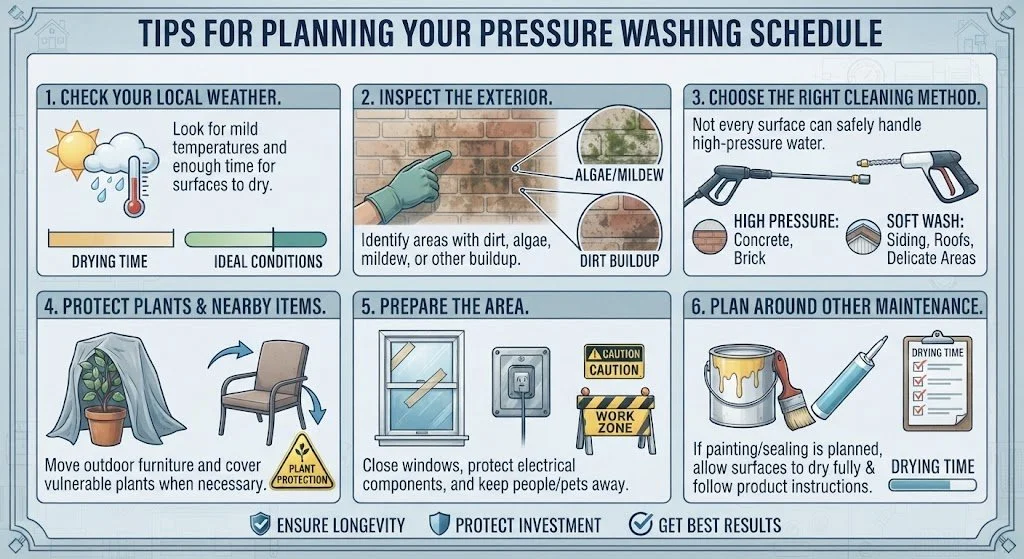
Tips for Planning Your Pressure Washing Schedule
Before choosing a date, consider the following steps:
Check your local weather: Look for mild temperatures and enough time for surfaces to dry.
Inspect the exterior: Identify areas with dirt, algae, mildew, or other buildup.
Choose the right cleaning method: Not every surface can safely handle high-pressure water.
Protect plants and nearby items: Move outdoor furniture and cover vulnerable plants when necessary.
Prepare the area: Close windows, protect electrical components, and keep people and pets away from the work zone.
Plan around other maintenance: If painting or sealing is planned, allow the surfaces to dry fully and follow the product instructions.
If you are unsure about the correct pressure or cleaning solution, consult a professional pressure washing service.
Frequently Asked Questions
What month is best for pressure washing a house?
April, May, September, and October can be good options in many parts of the US. However, the best month depends on your region's weather, pollen season, and risk of freezing temperatures.
Is spring or fall better for pressure washing?
Both seasons can work well. Spring is useful for removing winter dirt and pollen, while fall helps clear away summer grime before winter. Choose the season that best matches your local climate and cleaning needs.
Should I pressure wash my house before winter?
Cleaning in fall can help remove dirt and organic buildup before winter. However, wash only when temperatures allow safe cleaning and sufficient drying time.
Can I pressure wash my house in hot weather?
Yes, but extreme heat and direct sunlight can cause cleaning solutions to dry too quickly. Work during cooler hours and follow the recommended cleaning instructions.
Should I pressure wash my house before painting?
Yes, exterior cleaning can help remove dirt and contaminants before painting. However, the surface must dry completely and receive any additional preparation required by the paint manufacturer.
Is it better to pressure wash on a cloudy day?
A mild, overcast day can be suitable because surfaces may stay cooler and cleaning solutions may dry more slowly. Make sure the forecast does not include hazardous weather or conditions that prevent proper drying.
Final Thoughts
The best time of year to pressure wash your house in the US is generally spring or fall, when temperatures are moderate and conditions allow safe cleaning and drying. Spring helps remove winter residue and seasonal pollen, while fall prepares your home's exterior for colder weather.
Summer can also work well when temperatures are manageable, while winter is often less suitable in freezing regions. Consider your local climate, the condition of your home's exterior, and the material you are cleaning before scheduling the job. Choosing the right conditions and using the proper cleaning method can help keep your home looking clean without causing unnecessary surface damage.