
Yes, pressure washing can damage your roof or home siding if the water pressure is too high, the wrong nozzle is used, or the cleaning technique is unsuitable for the material. Excessive pressure can strip paint, crack vinyl siding, force water behind exterior panels, and remove protective granules from asphalt shingles. However, when used correctly on compatible surfaces, pressure washing can effectively remove dirt and stubborn buildup.
For homeowners in the United States, the safest cleaning method depends on the roofing material, siding type, surface condition, and amount of contamination. While concrete and certain durable surfaces can tolerate controlled pressure, roofs and many residential siding materials require gentler techniques.
Understanding the risks before cleaning your home's exterior can help you avoid costly repairs and protect your property's appearance.
How Can Pressure Washing Damage Your Roof?
Pressure washing can cause significant problems when applied to roofing materials that are not designed to withstand a concentrated stream of water. Roofs also contain overlapping components, seals, and vulnerable areas where water can enter.
1. Damage to Asphalt Shingles
Asphalt shingles have a protective surface of mineral granules that help shield the underlying material from sunlight and weather exposure.
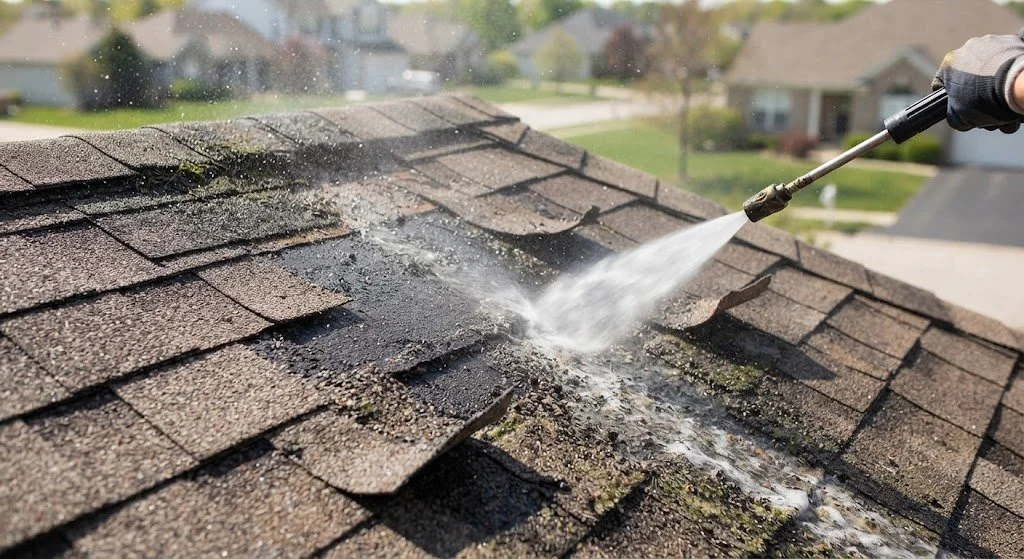
High-pressure water can dislodge these granules, potentially shortening the shingles' useful life. It may also lift shingle edges or damage the bonding between shingles.
For this reason, direct pressure washing is generally not recommended for asphalt shingle roofs. Manufacturer-approved low-pressure cleaning methods are usually more appropriate.
2. Water Leaks and Moisture Intrusion
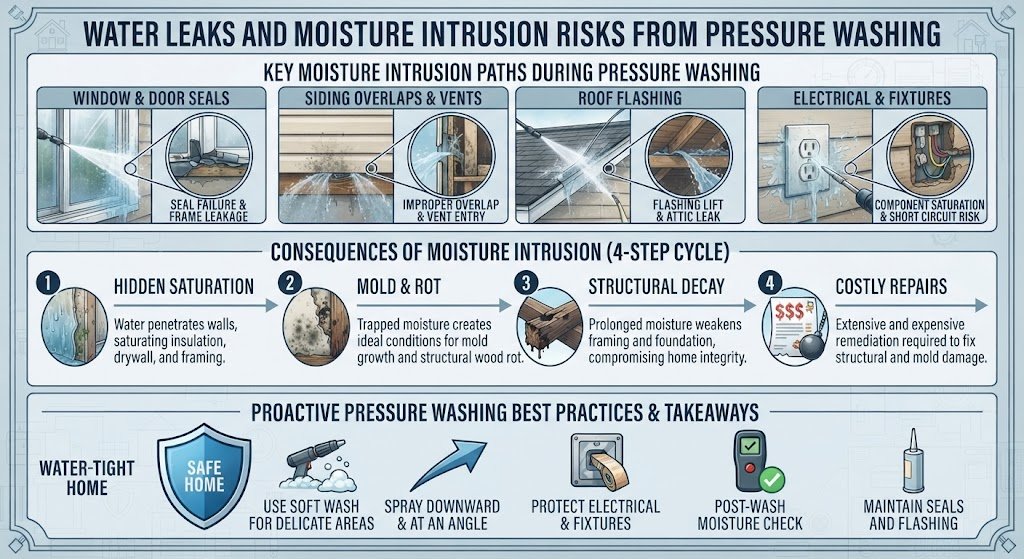
A powerful water stream can force moisture beneath shingles, flashing, or other roof components. Water may enter through damaged seals, loose materials, or vulnerable roof joints.
Even when a leak is not immediately visible, trapped moisture can contribute to problems inside the roof assembly.
Avoid directing pressurized water toward roof valleys, vents, flashing, and overlapping materials. Roof cleaning should follow the roofing manufacturer's recommendations.
3. Damage to Roof Coatings and Other Materials
Different roofing materials require different maintenance methods.
Asphalt shingles: High-pressure washing can remove protective granules and damage shingles.
Wood shingles and shakes: Excessive pressure can split wood fibers, create rough surfaces, and damage protective finishes.
Metal roofing: Pressure may damage coatings, force water into joints, or affect poorly secured components.
Tile roofing: Concentrated pressure can damage fragile or cracked tiles and force water beneath them.
A roof's age and existing condition also matter. Brittle, cracked, or deteriorating materials are more vulnerable to damage during cleaning.
Can Pressure Washing Damage Home Siding?
Yes. Pressure washing can damage home siding when the pressure, spray angle, or cleaning method is inappropriate. Some siding materials tolerate gentle rinsing, while others require specialized care.
1. Vinyl Siding
Vinyl siding is relatively durable, but it can crack, loosen, or become damaged under excessive pressure. High-pressure water may also enter behind the panels if sprayed upward or directly into seams.
Water trapped behind siding can contribute to moisture problems, particularly when the wall assembly cannot dry properly.
Safer approach: Use a garden hose or a low-pressure cleaning method approved by the siding manufacturer. Direct water downward, avoid panel seams, and test a small area before cleaning the entire wall.
2. Wood Siding
Wood siding can be especially vulnerable to aggressive pressure washing. A concentrated stream may tear wood fibers, leave visible grooves, or remove paint and stain unevenly.
Excessive moisture can also enter cracks and joints, increasing the risk of prolonged dampness.
Safer approach: Use a suitable wood cleaner, soft brush, and gentle rinsing when possible. If pressure washing is appropriate, use conservative settings and avoid directing the nozzle too close to the surface.
3. Stucco Siding
Stucco may develop cracks as a home settles or experiences temperature changes. High-pressure water can widen weak areas or force moisture into existing openings.
Older, damaged, or poorly maintained stucco requires particular caution.
Safer approach: Inspect the surface for cracks and loose sections before cleaning. Use a manufacturer-approved low-pressure method, and repair significant damage before washing.
4. Painted and Fiber Cement Siding
Excessive pressure can strip paint, damage caulking, or force water into joints. Fiber cement siding can also be affected when the coating or surrounding seals are damaged.
Safer approach: Follow the siding manufacturer's cleaning instructions and use the least aggressive effective method. If paint is already peeling or the material is deteriorating, address those issues before cleaning.
Warning Signs That Pressure Washing Has Caused Damage
After exterior cleaning, inspect your roof and siding for signs of potential damage.
Common warning signs include:
Missing or damaged roofing granules: Asphalt shingles may have lost some of their protective surface.
Cracked or loose siding panels: Water pressure may have affected the panels or their fasteners.
Peeling or chipped paint: The cleaning process may have removed part of the protective coating.
New leaks or damp interior areas: Water may have entered through vulnerable roof or wall components.
Rough or splintered wood: Excessive pressure may have damaged the surface fibers.
Widened cracks or damaged seals: Existing weaknesses may have worsened during cleaning.
If you notice a leak or significant surface damage, stop cleaning and arrange an appropriate inspection. Avoid assuming that a surface is undamaged simply because it looks clean.
Pressure Washing vs. Soft Washing: Which Is Safer?
Pressure washing uses mechanical force from pressurized water to remove dirt and surface buildup. Soft washing relies on low-pressure application of suitable cleaning solutions, followed by appropriate rinsing.
For many roofs and delicate siding materials, soft washing is often the safer option when the manufacturer permits it.
Soft washing is not automatically risk-free. Cleaning chemicals can damage plants, finishes, and nearby materials if used incorrectly. Follow product instructions, protect landscaping, and ensure runoff is managed appropriately.
How to Clean Your Roof and Siding Without Causing Damage
Use these precautions before starting an exterior cleaning project.
Inspect the surface first. Look for cracks, loose panels, damaged shingles, deteriorating paint, and vulnerable joints.
Choose the right cleaning method. Do not assume that the same pressure setting works for every material.
Follow manufacturer instructions. Roofing and siding manufacturers may specify approved products and cleaning techniques.
Protect nearby areas. Keep water and cleaning solutions away from electrical components, open vents, and vulnerable openings. Protect landscaping as directed by the cleaner's label.
Consider professional help. Roof cleaning can involve fall hazards, fragile materials, and difficult access. A qualified professional may be the safer choice for steep roofs or extensive buildup.
When hiring a contractor, ask how they will clean the surface, what equipment and solutions they use, and how they will protect your home's exterior.
Frequently Asked Questions
Is it safe to pressure wash a roof?
It depends on the roofing material and manufacturer recommendations. Direct high-pressure washing is generally unsuitable for asphalt shingles because it can remove protective granules and damage the roofing system.
Can pressure washing cause siding to leak?
Yes. Excessive pressure or spraying at the wrong angle can force water behind siding panels or through damaged seals. Use an approved cleaning method and avoid directing water into joints.
What is the safest way to clean vinyl siding?
A garden hose, suitable siding cleaner, and soft brush are often sufficient. If using a pressure washer, follow the manufacturer's instructions and use a gentle, appropriate setting.
Does soft washing damage shingles?
Soft washing can damage roofing materials if unsuitable chemicals or application methods are used. Use only a cleaning method approved for the specific roof, and follow the product manufacturer's instructions.
Should I hire a professional to clean my roof?
Professional help is worth considering for steep roofs, fragile materials, extensive algae growth, or difficult access. Choose a contractor experienced with your roofing material and the appropriate cleaning method.
Final Thoughts
Pressure washing can damage your roof or home siding when excessive pressure, unsuitable equipment, or improper techniques are used. Asphalt shingles, vinyl siding, wood, and stucco all have specific cleaning requirements that should be considered before starting.
For most roofs and delicate exterior materials, a manufacturer-approved low-pressure method is often preferable to aggressive washing. Inspect surfaces beforehand, address existing damage, and use appropriate cleaning products.
By choosing the right approach for each material, you can remove dirt and buildup while reducing the risk of costly repairs and protecting your home's exterior.