
Professional exterior house paint typically lasts between 5 and 10 years, depending on the siding material, paint quality, surface preparation, and local weather conditions. Some well-maintained surfaces can keep their finish for longer, while exposed wood and trim may need repainting sooner. Hiring a professional painter can help extend the life of an exterior paint job through proper preparation, suitable product selection, and correct application.
For homeowners in the United States, understanding how long professional exterior house paint lasts makes it easier to plan maintenance, protect siding, and avoid unexpected repainting expenses. However, there is no single lifespan that applies to every home. Sun exposure, humidity, rain, temperature changes, and the condition of the existing paint all influence how long a finish remains effective.
How Long Does Professional Exterior House Paint Last on Different Surfaces?
The lifespan of exterior paint varies depending on the material being painted. Some surfaces hold paint well for years, while others experience more movement, moisture exposure, or weather-related wear.
Here is a general guide for common exterior materials:
Wood siding: Approximately 3–7 years
Wood trim: Approximately 3–5 years
Stucco: Approximately 5–10 years
Fiber cement siding: Approximately 7–10 years
Aluminum siding: Approximately 5–10 years
Vinyl siding: Often 10 years or longer, depending on the coating and conditions
Painted brick: Varies considerably based on the paint system, brick condition, and moisture management
These ranges are general estimates rather than guarantees. A home's exposure, the condition of the substrate, and the manufacturer's recommendations can change the expected repainting schedule.
Professional application can improve durability, but it cannot eliminate the effects of severe weather, poor drainage, or deteriorating building materials.
What Factors Affect the Lifespan of Exterior House Paint?
Several factors determine how long an exterior paint job will last. Understanding them can help you choose the right products and maintain your home's exterior more effectively.
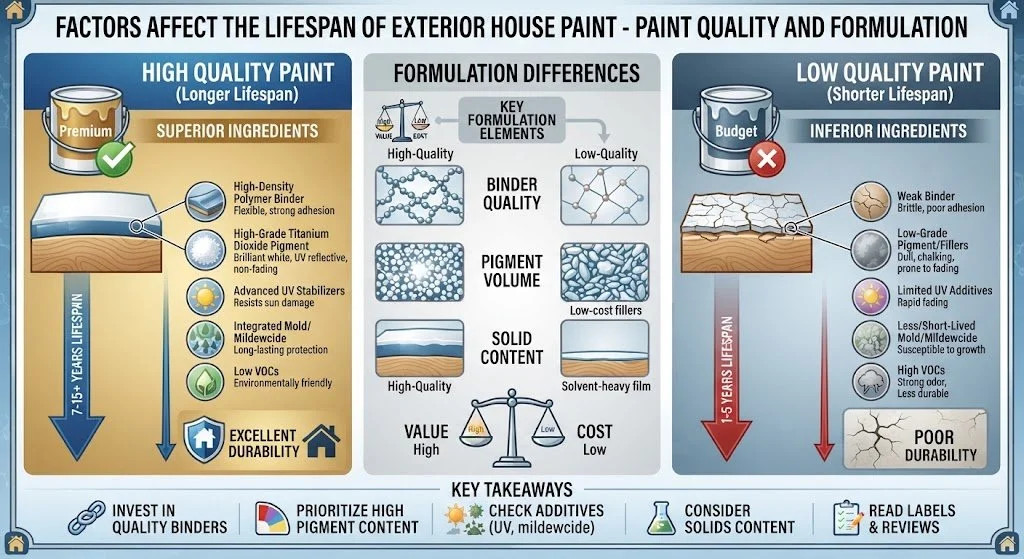
1. Paint Quality and Formulation
Exterior paints are designed to resist sunlight, moisture, and temperature fluctuations. However, products vary in their performance, durability, and suitability for different surfaces.
High-quality exterior paint may provide better color retention, adhesion, and resistance to cracking or peeling when used correctly. Acrylic latex paints are commonly used on many residential exterior surfaces because of their flexibility and weather resistance.
The best product depends on the siding material, existing coating, and local climate. Ask your painter to explain why a particular paint and primer system is appropriate for your home.
2. Surface Preparation
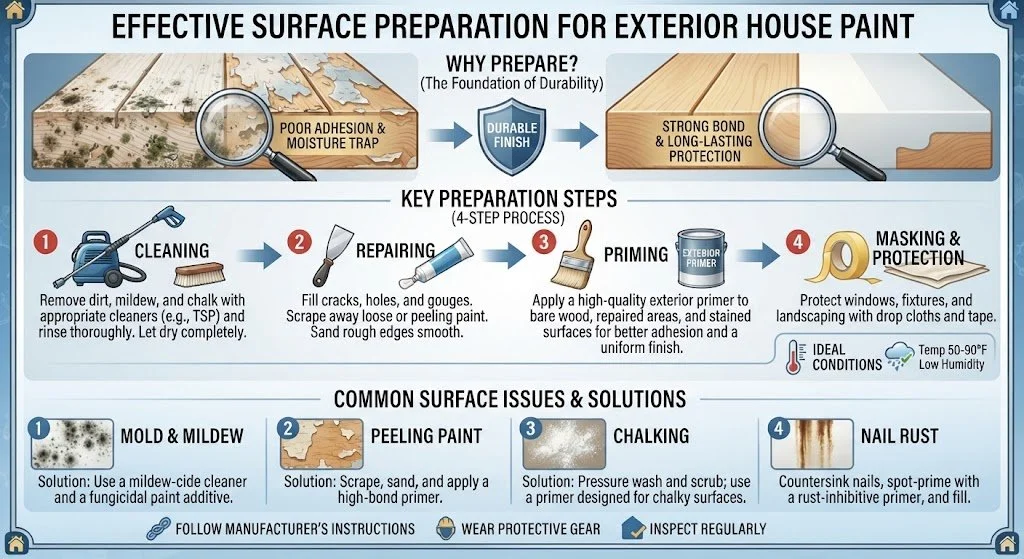
Proper preparation is one of the most important factors in determining how long professional exterior house paint lasts.
Before painting, a professional should assess the surface, remove loose paint, clean away dirt and contaminants, and address minor defects. Bare areas may require primer, while damaged siding or trim may need repair or replacement.
Applying new paint over peeling, dirty, or unstable surfaces can lead to premature failure, even when expensive paint is used. Correct preparation gives the new coating a suitable surface to bond with.
3. Climate and Weather Conditions
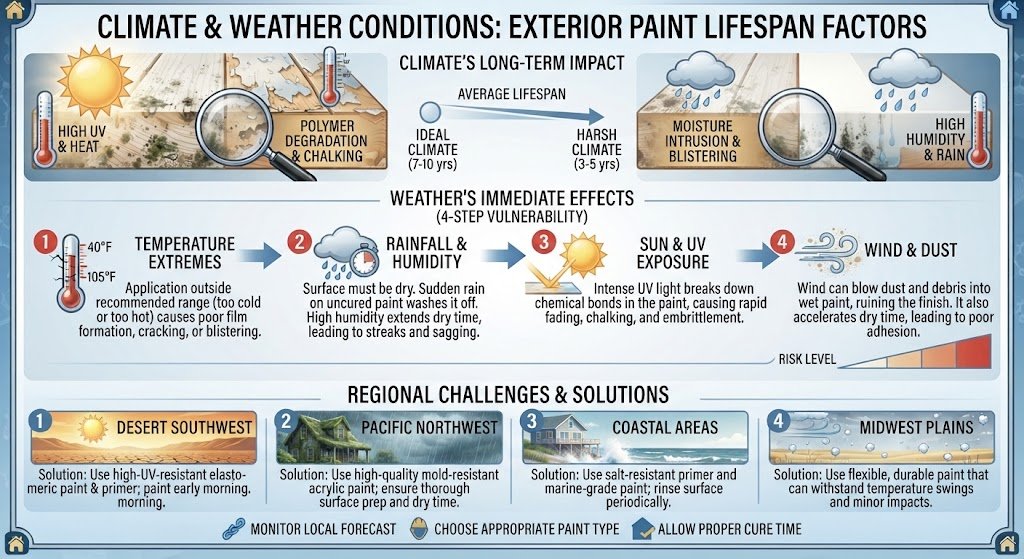
Weather has a significant impact on exterior paint performance across the United States.
Homes in hot, sunny states may experience fading and coating deterioration from prolonged ultraviolet exposure. In humid regions, persistent moisture can contribute to mildew and paint failure. Areas with heavy rain, freezing winters, and repeated temperature changes may experience additional wear.
Coastal homes can face salt air and wind-driven rain, which may affect painted surfaces and exposed metal components.
Professional painters should choose products and application methods appropriate for the home's local conditions.
4. Sunlight and Building Design
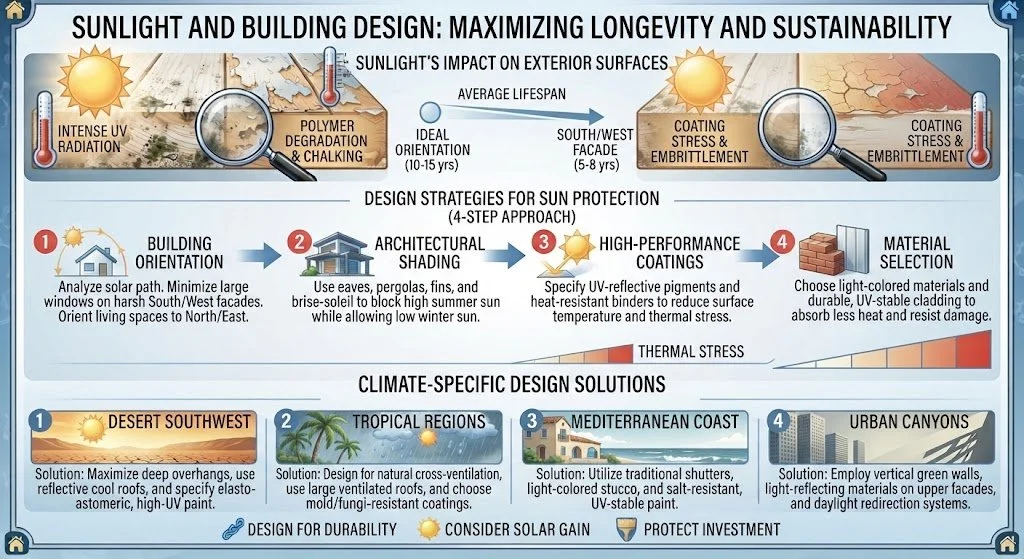
Walls that receive direct sunlight for much of the day may fade faster than shaded areas. South- and west-facing walls often receive strong sunlight in many parts of the United States.
Roof overhangs, covered porches, and other architectural features may protect some surfaces from direct rain and sunlight. This means one side of a house can need repainting before the rest.
During inspections, pay particular attention to exposed walls, window trim, fascia boards, and other areas that experience heavy weather exposure.
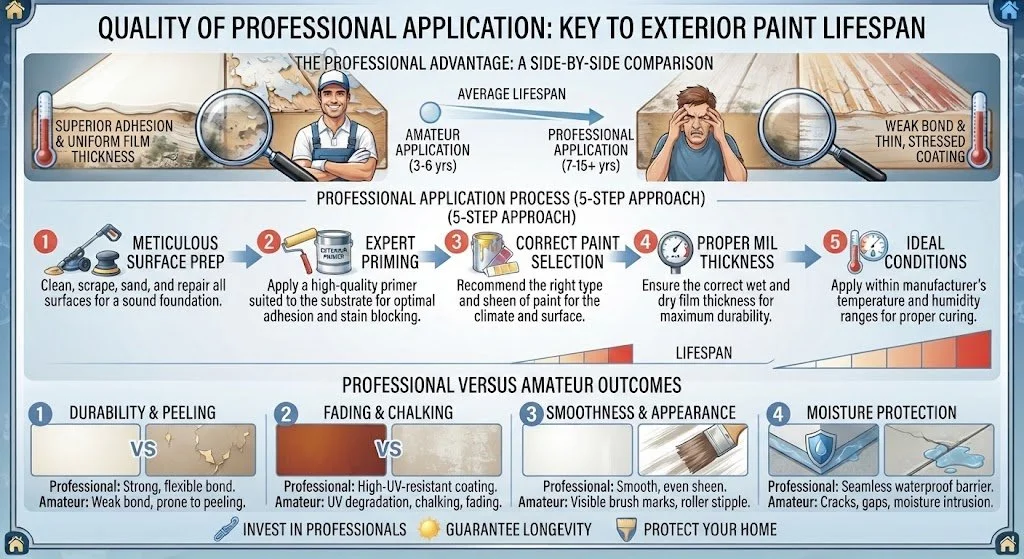
5. Quality of Professional Application
Even high-quality paint can fail early if it is applied incorrectly. Experienced painters understand the importance of proper surface preparation, primer selection, coverage, and drying conditions.
They also know to follow the manufacturer's requirements for temperature, humidity, and recoat times. Applying paint when conditions are unsuitable can affect adhesion and durability.
Professional work does not guarantee a specific lifespan, but a well-planned painting process can help reduce avoidable problems.
Signs Your Exterior House Paint Needs Repainting
You do not have to wait until the end of a predicted lifespan to repaint your home. Regular inspections can help you identify deterioration before it becomes more extensive.
Look for these warning signs:
Peeling or flaking paint: The coating is losing its bond with the surface.
Fading or chalking: Sunlight and weather may have degraded the finish.
Cracked paint: The coating may be aging, or the underlying material may be moving.
Blistering: Moisture or heat may be affecting the paint film.
Exposed wood or bare siding: Unprotected areas may be more vulnerable to weather damage.
Persistent mildew or staining: Moisture conditions may need investigation before repainting.
Some problems can be addressed with localized repairs and touch-ups. However, widespread peeling, cracking, or fading may indicate that the entire exterior needs a new coat.
If you notice soft wood, recurring dampness, or extensive surface damage, correct the underlying problem before applying new paint.
How Can You Make Professional Exterior Paint Last Longer?
Although no paint job lasts forever, a few maintenance practices can help extend its useful life.
Inspect Your Home Every Year
Check siding, trim, doors, and window frames for early signs of paint deterioration. Pay particular attention to areas exposed to direct sunlight and rain.
Keep Exterior Surfaces Clean
Remove ordinary dirt and buildup using cleaning methods appropriate for the material. Avoid excessive pressure washing, which can damage siding, remove sound paint, or force water behind exterior boards.
Address Moisture Problems Promptly
Keep gutters clear, maintain proper drainage, and investigate leaks or recurring damp areas. Paint cannot solve water intrusion or structural moisture problems.
Repair Damaged Surfaces Early
Replace deteriorated wood, repair appropriate cracks, and prepare exposed areas before repainting. Small repairs may prevent more extensive damage.
Use Suitable Paint and Primer.
Choose products designed for your siding material and local conditions. Follow the manufacturer's guidance for preparation, application, and maintenance.
Is Professional Exterior Painting Worth the Cost?
Professional exterior painting can be worthwhile when you want a consistent finish, need extensive preparation, or have a large or difficult-to-access home.
A professional painter can assess the existing coating, recommend suitable materials, and identify surface problems that need attention before painting. Proper application may also reduce the likelihood of premature peeling and unnecessary repainting.
However, the quality of the result depends on the contractor and the agreed scope of work. Request a written estimate that explains surface preparation, repairs, primer, paint products, number of coats, and cleanup.
Comparing these details helps you evaluate the value of a painting service rather than choosing solely by the lowest price.
Frequently Asked Questions
Does professional exterior paint last longer than DIY paint?
Professional application can help paint last longer when the work includes proper preparation, suitable materials, and correct application. However, professionals and homeowners can use the same quality products, so the result depends on the entire painting process.
How often should you repaint a house exterior?
Many homes need repainting every 5–10 years, although some materials require more frequent attention. Inspect your home's condition regularly instead of relying only on a fixed schedule.
What exterior paint lasts the longest?
There is no single paint that lasts the longest on every surface. Durable acrylic latex products are suitable for many residential applications, but the best choice depends on the substrate, climate, existing coating, and manufacturer's recommendations.
Can exterior house paint last 15 years?
Some properly maintained surfaces and paint systems may last 15 years or longer under favorable conditions. However, this is not a reliable expectation for every home, especially exposed wood siding and trim.
What is the best season for exterior house painting?
Spring and fall often provide suitable conditions in many locations, but the ideal season depends on the local climate. Paint only when temperature, humidity, and weather conditions meet the manufacturer's requirements.
Final Thoughts
So, how long does professional exterior house paint last? For many American homes, the typical range is around 5–10 years, but the actual lifespan depends on the surface material, weather exposure, paint quality, and preparation.
Professional painting can help maximize durability when the contractor uses suitable products, prepares the surface properly, and follows application guidelines. By inspecting your home annually, addressing moisture problems and repairing early signs of deterioration, you can protect your exterior and make informed decisions about when to repaint.