
Painting is one of the most popular ways to improve a home's appearance without undertaking a major renovation. However, before starting your project, you need to decide whether to hire a professional painter or DIY your home renovation. The right choice depends on your budget, available time, painting skills, and the condition of the surfaces you want to paint.
DIY painting can save money on labor and give you control over the project. Hiring a professional painter, on the other hand, can provide a more consistent finish, save time, and help manage challenging preparation work. For small projects such as painting a bedroom, DIY may be practical. For large homes, damaged surfaces, high ceilings, or extensive exterior painting, professional help may be the better option.
Understanding the costs, benefits, and potential challenges of each approach will help you make an informed decision.
Hire a Professional Painter or DIY: What Is the Difference?
The main difference between hiring a professional painter and doing the work yourself is who handles the preparation, application, equipment, and finishing. A DIY project requires you to manage every stage, while a professional painter brings experience, tools, and an established process.
Neither option is automatically better for every homeowner. The most suitable choice depends on the size and difficulty of your renovation.
Benefits of DIY Home Painting
Doing your own painting can be rewarding, particularly when you have a manageable project and enough time to complete it carefully.
1. Save on Labor Costs
One of the biggest advantages of DIY painting is avoiding professional labor charges. You will still need to pay for paint, brushes, rollers, painter's tape, drop cloths, and other supplies, but you may reduce the overall project cost.
However, savings depend on the amount of preparation required, the equipment you already own, and whether mistakes lead to additional expenses.
2. Work at Your Own Pace
DIY painting gives you control over the schedule. You can work on one room at a time, spread the project over several weekends, or make adjustments as you go.
This flexibility can be useful when you are renovating a home gradually rather than completing everything at once.
3. Choose Every Detail Yourself
When you handle the painting, you can personally select colors, finishes, and application techniques. You can also decide how much time to spend on details such as accent walls, trim, and decorative finishes.
4. Develop Practical Skills
Painting your own home can help you learn useful maintenance skills. With practice, you may become more confident in preparing surfaces, applying primer, cutting in around edges, and using rollers correctly.
When DIY makes sense: Consider doing the work yourself when painting a small bedroom, refreshing a previously painted wall, or completing another straightforward project with minimal repairs.
Benefits of Hiring a Professional Painter
Professional painting services can be especially valuable when the project requires experience, specialized equipment, or substantial preparation.
1. Achieve a More Consistent Finish
Experienced painters understand how to prepare different surfaces, select appropriate primers, maintain even coverage, and create clean edges. Their techniques can help reduce visible roller marks, uneven color, drips, and other common painting problems.
The quality of the result still depends on the contractor, materials, and project conditions, so it is important to review previous work and references.
2. Save Time and Effort
Painting involves more than applying color. Furniture protection, cleaning, sanding, repairs, priming, multiple coats, and cleanup can take considerable time.
Professional painters regularly perform these tasks and may complete larger projects more efficiently than an inexperienced homeowner working alone.
3. Handle Complex Painting Projects
Some renovations are difficult or unsafe without appropriate equipment and experience. Examples include painting high ceilings, stairwells, multi-story exteriors, and extensive exterior trim.
Professionals may have the ladders, scaffolding, surface-preparation tools, and safety equipment needed for these jobs. Homeowners should avoid tasks that require working at dangerous heights without proper training and equipment.
4. Address Surface Preparation Properly
Good paint adhesion depends on the condition of the surface. Peeling paint, damaged drywall, cracked trim, and moisture-related problems may require repairs before painting begins.
A qualified painter can identify many common preparation issues and explain which repairs are included in the estimate. However, serious water damage, mold problems, or structural issues may require a separate specialist.
When professional painting makes sense: Consider hiring a painter for whole-house renovations, exterior repainting, extensive repairs, detailed trim work, or projects with tight deadlines.
How Much Does DIY Painting Cost Compared With Professional Painting?
The total cost depends on the size of the area, paint quality, surface condition, number of coats, and local labor rates.
With DIY painting, your expenses typically include:
Interior or exterior paint
Primer and surface-repair materials
Brushes, rollers, trays, and extension poles
Painter's tape and protective coverings
Equipment rental, if necessary
Professional painting estimates generally include labor and may include paint, supplies, preparation, and cleanup. Additional charges may apply for extensive scraping, repairs, difficult access, or specialty finishes.
To compare options fairly, obtain detailed estimates from local painting contractors and calculate the full cost of doing the work yourself. Include the value of your time, equipment purchases, and the possibility of correcting mistakes.
The lowest initial price is not always the least expensive option in the long run. Proper preparation and application can help reduce the need for premature repainting.
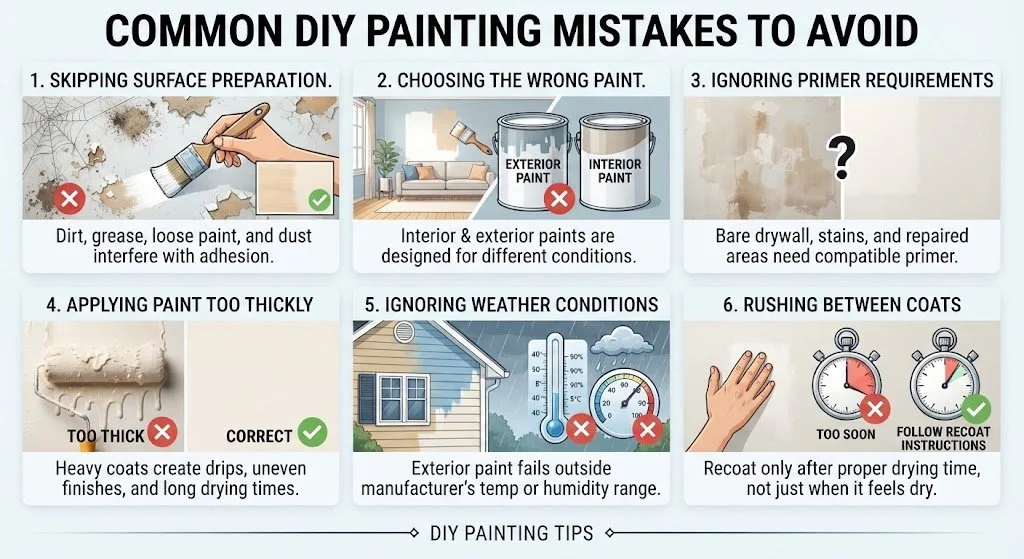
Common DIY Painting Mistakes to Avoid
If you decide to paint your home yourself, avoid these common mistakes:
Skipping surface preparation: Dirt, grease, loose paint, and dust can interfere with adhesion.
Choosing the wrong paint: Interior and exterior paints are designed for different conditions. Select products suitable for the intended surface.
Ignoring primer requirements: Bare drywall, stains, repaired areas, and certain surfaces may need a compatible primer.
Applying paint too thickly: Heavy coats can create drips, uneven finishes, and longer drying times.
Ignoring weather conditions: Exterior paint may not perform properly when applied outside the manufacturer's recommended temperature or humidity range.
Rushing between coats: Follow the product's recoat instructions instead of relying only on whether the surface feels dry.
Addressing these issues before and during painting can improve the final result and reduce wasted materials.
How to Choose the Right Painting Contractor
If you decide to hire a professional painter, take time to compare contractors rather than choosing solely by price.
Ask for a written estimate that explains the preparation work, paint products, number of coats, cleanup, and any additional charges. Confirm who will supply the materials and whether repairs are included.
Check recent reviews, references, and examples of completed projects. Ask about insurance and any licensing requirements that apply in your state or locality. Before work begins, clarify the payment schedule, expected completion date, and how unexpected problems will be handled.
A clear agreement helps prevent misunderstandings and makes it easier to compare estimates accurately.
Frequently Asked Questions
Is DIY painting worth the money?
DIY painting can be worthwhile for small projects when you have the time and skills to prepare surfaces properly. For complex projects, the cost of equipment, mistakes, and additional repairs may reduce the savings.
Do professional painters use better paint?
Not necessarily. Both homeowners and professionals can purchase quality paint. Professionals may have experience selecting suitable products, calculating quantities, and applying them correctly.
How long does it take to paint a house yourself?
The timeline depends on the home's size, surface condition, number of coats, and your available working hours. A single room may take a weekend, while an entire home can require considerably longer.
Should I hire a professional for exterior painting?
Professional help is worth considering for multi-story homes, extensive surface damage, difficult access, and large exterior projects. Smaller, accessible areas may be suitable for DIY if you can complete the work safely.
Can I hire a painter just for preparation?
Yes. Some contractors may agree to provide specific services, such as scraping, sanding, repairs, or priming. Confirm the scope of work and responsibilities before hiring them.
Final Verdict: Should You Hire a Professional Painter or DIY?
Deciding whether to hire a professional painter or DIY your home renovation comes down to balancing cost, time, skill, and project complexity.
DIY painting is a practical option for smaller projects when you have the patience to prepare surfaces and apply paint carefully. Hiring a professional is often the better choice for large renovations, difficult exterior work, extensive repairs, or projects that demand a consistent finish within a limited timeframe.
Before making your decision, assess the condition of your home, estimate the complete DIY cost, and compare it with detailed professional quotes. Choosing the right approach for your specific project can help you achieve a durable, attractive finish while making the most of your renovation budget.