
Power washing can be safe for vinyl siding and wood decks when the correct equipment, pressure, and cleaning techniques are used. However, excessive pressure or improper handling can damage vinyl panels, strip wood fibers, force water into hidden spaces, and shorten the life of exterior finishes. The safest cleaning method depends on the material's condition, the type of dirt being removed, and the equipment being used.
For most homeowners in the United States, the key is to use the least aggressive cleaning method that effectively removes dirt, mildew, and surface buildup. Vinyl siding often responds well to gentle washing, while wood decks usually require extra care because the fibers can be damaged by concentrated water pressure.
Before starting a cleaning project, understand the risks, choose the right approach for each surface, and follow the manufacturer's recommendations.
Is Power Washing Safe for Vinyl Siding?
Power washing can clean vinyl siding effectively, but it must be done carefully. Vinyl is durable enough for normal outdoor exposure, yet it can crack, loosen, or allow water behind the panels when subjected to excessive pressure or an unsuitable spray angle.
For routine cleaning, a garden hose, soft-bristle brush, and mild siding cleaner may be sufficient. A pressure washer is an option for tougher buildup when the siding manufacturer permits it.
Potential Risks of Power Washing Vinyl Siding
Using too much pressure can cause several problems:
Cracked or damaged panels: Older, brittle, or weather-damaged vinyl may break under concentrated pressure.
Water intrusion: Spraying upward or directly into panel seams can push water behind the siding.
Damaged seals and trim: Excessive pressure near windows, doors, and joints may affect caulking or other vulnerable components.
Surface discoloration: Uneven cleaning or unsuitable chemicals can leave visible marks or affect the finish.
Loosened panels: Poorly secured siding may shift or become damaged during cleaning.
These problems are not inevitable. They are more likely when the washer is used too aggressively or the siding is already in poor condition.
How to Clean Vinyl Siding Safely
Follow these steps to reduce the risk of damage:
Inspect the siding. Look for loose panels, cracks, damaged caulking, and areas where water could enter.
Choose a gentle cleaning method. Start with a garden hose and suitable cleaner. Use a pressure washer only when appropriate for the siding.
Test a small area. Check the cleaning result before treating the entire wall.
Use a wide spray pattern. Avoid concentrated or narrow jets that can damage the surface.
Spray from a safe angle. Work from above and direct water downward rather than forcing it behind the panels.
Protect vulnerable areas. Keep water away from electrical components, open vents, and gaps around windows and doors.
Rinse thoroughly. Remove cleaner residue according to the product instructions.
Avoid directing water into siding seams or upward beneath overlapping panels. If the siding is brittle, badly cracked, or loose, repair it before attempting pressure washing.
Is Power Washing Safe for Wood Decks?
Power washing can clean wood decks, but it carries a greater risk of surface damage than gentle cleaning methods. Wood is a natural material with fibers that can splinter, soften, or become rough when exposed to excessive water pressure.
The risk depends on the wood species, age, condition, and existing finish. Softwoods such as pine may be particularly vulnerable to aggressive cleaning, while hardwoods can also suffer damage if the pressure is too high.
For many decks, a deck cleaner, soft brush, and garden hose are sufficient for routine maintenance. A pressure washer may help remove stubborn dirt, but it should be used cautiously.
Common Problems Caused by Pressure Washing Wood
Raised wood fibers: Excessive pressure can tear the surface fibers, leaving the deck rough and uneven.
Splintering and gouging: A narrow spray pattern held too close to the wood can create visible grooves and damage individual boards.
Finish removal: Pressure washing can strip paint, stain, or protective coatings, sometimes unevenly.
Uneven appearance: Differences in pressure, distance, and spray movement may leave streaks or patches.
Moisture-related problems: Excessive water can penetrate gaps and joints. If the deck does not dry properly, persistent moisture may contribute to deterioration.
How to Power Wash a Wood Deck Safely
If pressure washing is appropriate for your deck, use a cautious approach.
Inspect the boards. Check for rot, loose fasteners, splinters, and damaged sections. Replace or repair unsafe boards before cleaning.
Remove loose debris. Sweep away leaves, dirt, and other material before applying water.
Choose a suitable cleaner. Use a product designed for the wood type and the condition of the deck.
Start with low pressure. Follow the deck and equipment manufacturer's guidance, and begin with the least aggressive setting that works.
Use a wide-angle nozzle. Avoid narrow jets that concentrate force on a small area.
Keep the nozzle moving. Maintain a consistent distance and use smooth, overlapping passes to reduce streaking.
Let the wood dry completely. Before applying stain, sealer, or paint, follow the coating manufacturer's moisture and drying requirements.
If you are unsure how the wood will respond, test an inconspicuous area first. For old, soft, painted, or heavily weathered decks, gentle hand cleaning may be the better option.
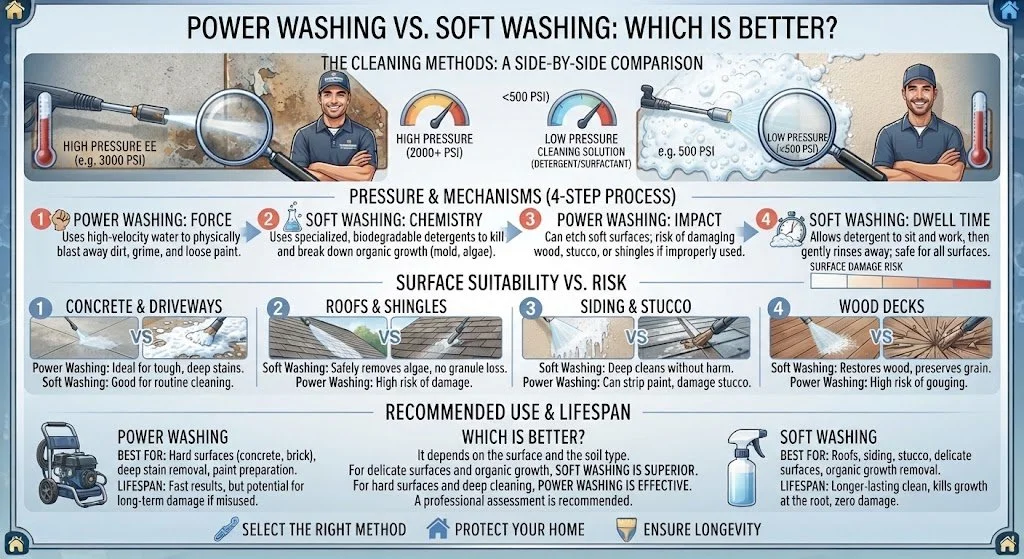
Power Washing vs. Soft Washing: Which Is Better?
Power washing and soft washing are different approaches to exterior cleaning.
Power washing uses pressurized water to remove surface dirt and buildup. Soft washing relies primarily on low-pressure water and suitable cleaning solutions to loosen contaminants.
For vinyl siding, soft washing or gentle rinsing is often sufficient for ordinary dirt and mildew. For wood decks, brushing with an appropriate cleaner may offer better control than high-pressure cleaning.
Neither method is automatically safe in every situation. Cleaning solutions can damage plants, finishes, or nearby materials if used incorrectly. Always follow product instructions, protect landscaping, and rinse surfaces as directed.
When Should You Hire a Professional?
Consider hiring an exterior cleaning professional if your siding is fragile, your deck has extensive damage, or the surfaces are difficult to access safely.
Professional help may also be worthwhile when removing stubborn buildup, preparing a deck for refinishing, or cleaning a large multi-story home.
Ask the contractor about the cleaning method, equipment settings, surface protection, and experience with your specific materials. A responsible professional should be able to explain how the process will minimize the risk of damage.
Avoid working from unstable ladders while operating a pressure washer. The force of the water can affect your balance, and wet surfaces can become slippery.
Frequently Asked Questions
What PSI is safe for vinyl siding?
There is no universal pressure setting that is safe for every vinyl siding product. Follow the manufacturer's recommendations and use the lowest effective pressure. Gentle rinsing may be sufficient for routine cleaning.
Can power washing damage a wood deck?
Yes. Excessive pressure can cause splintering, raised fibers, gouges, and uneven finishes. Use a suitable cleaner, a wide spray pattern, and a conservative cleaning method.
Should I use soap when pressure washing vinyl siding?
A cleaner specifically labeled for vinyl siding can help remove dirt and organic buildup. Follow the product instructions and rinse thoroughly without forcing water behind the panels.
How often should I power wash my deck?
There is no fixed schedule. Clean your deck when dirt, algae, or other buildup requires attention. Routine sweeping and gentle cleaning can reduce the need for frequent pressure washing.
Should I power wash a deck before staining it?
Cleaning may be necessary before staining, but aggressive pressure washing can damage the wood. After cleaning, allow the deck to dry and confirm that the surface meets the stain manufacturer's preparation requirements.
Final Thoughts
Power washing is safe for vinyl siding and wood decks only when the method matches the material and its condition. Vinyl siding generally benefits from gentle cleaning that avoids seams and vulnerable openings, while wood decks require careful pressure control to prevent splintering and surface damage.
Start with the mildest effective cleaning method, inspect the surface before washing, and follow the manufacturer's instructions. When a surface is fragile or the risk of damage is high, hand cleaning or professional assistance may be the safest choice.