
Your home's exterior paint does more than improve its appearance. It also helps protect siding, trim, and other exterior surfaces from moisture, sunlight, and everyday weather exposure. But how often should you repaint your home exterior? For most homes in the United States, exterior paint lasts approximately 5 to 10 years, although the exact lifespan depends on the surface material, paint quality, climate, and maintenance.
Wood siding may need repainting every 3 to 7 years, while properly painted fiber cement and stucco can often last 7 to 10 years or longer. Brick, vinyl, and other materials have different maintenance requirements. Instead of relying only on a calendar, homeowners should regularly inspect their exterior for signs of paint failure.
How Often Should You Repaint Your Home Exterior?
The ideal repainting schedule depends largely on the material covering your home's exterior. Some surfaces absorb moisture and expand or contract more than others, while certain materials hold paint for longer periods.
Here is a general guide for common exterior surfaces:
Wood siding: Every 3–7 years
Wood trim: Every 3–5 years
Stucco: Every 5–10 years
Fiber cement siding: Every 7–10 years
Aluminum siding: Every 5–10 years
Vinyl siding: Often 10 years or longer, depending on the coating and conditions
Brick: Painting is generally less frequent and depends on the original finish and condition
These timeframes are estimates, not strict rules. A house exposed to intense sunlight, heavy rain, coastal air, or frequent temperature changes may require attention sooner. High-quality paint, proper surface preparation, and professional application can help extend the life of an exterior paint job.
Factors That Affect Exterior Paint Lifespan
Several factors determine how long your exterior paint will remain attractive and protective.
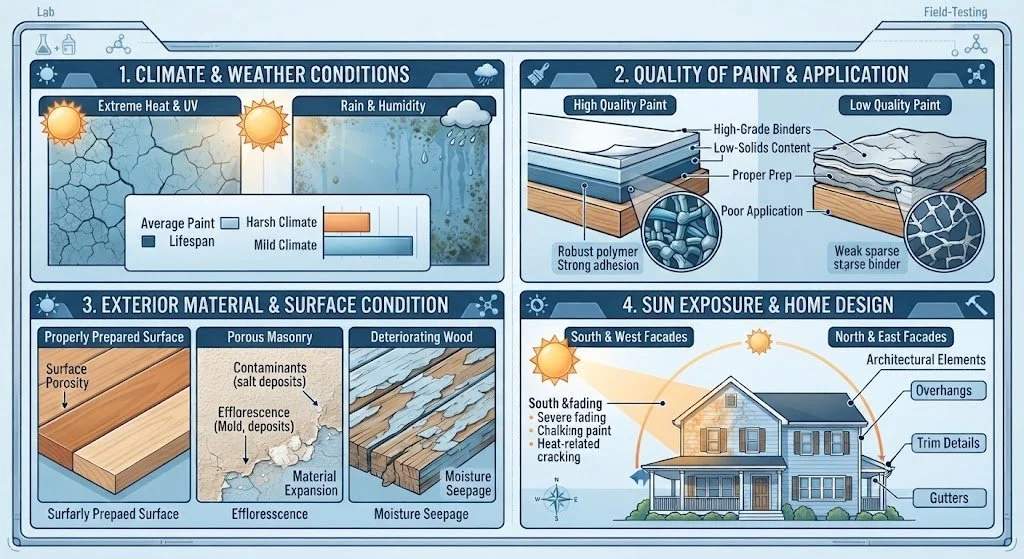
1. Climate and Weather Conditions
Weather is one of the biggest influences on exterior paint. Homes in hot, sunny areas may experience fading, cracking, and peeling because of prolonged ultraviolet exposure. In rainy or humid regions, moisture can contribute to blistering, mildew, and paint failure.
Freezing temperatures and repeated freeze-thaw cycles can also damage painted surfaces, particularly when moisture enters small cracks. Coastal homes may face additional challenges from salt air and wind-driven rain.
If you live in an area with extreme weather, inspect your exterior more frequently rather than waiting for a specific year to repaint.
2. Quality of Paint and Application
Not all exterior paints provide the same level of durability. Quality exterior paint formulated for your home's siding material can offer better resistance to fading, moisture, and weather exposure.
However, even premium paint may fail early if it is applied incorrectly. Dirty surfaces, loose old paint, inadequate priming, or painting under unsuitable weather conditions can reduce adhesion.
Proper preparation is essential. Cleaning, scraping, sanding where appropriate, repairing damaged areas, and applying a suitable primer help create a durable finish.
3. Exterior Material and Surface Condition
Different materials respond differently to weather and paint. Wood can absorb moisture and expand or contract, while stucco may develop cracks that allow water to enter. Vinyl siding can experience fading or damage from heat, and metal siding may require attention if the coating breaks down or corrosion develops.
The condition of the underlying material matters just as much as the paint itself. Repainting over damaged siding without addressing the problem may lead to recurring issues.
4. Sun Exposure and Home Design
South- and west-facing walls in many parts of the United States receive strong afternoon sunlight. These areas may fade or deteriorate faster than shaded sections of the house.
Roof overhangs, covered porches, and other architectural features can protect some surfaces from rain and direct sunlight. As a result, one side of your home may need repainting before the rest.
Signs Your Home Exterior Needs Repainting
Your home's condition is often a better indicator than its age. Watch for these common warning signs:
Peeling or flaking paint: The coating is losing its bond with the surface.
Cracking or blistering: Paint may be breaking down or moisture may be trapped underneath.
Faded or chalky color: Sunlight and weather may have worn away the finish.
Bare patches: Exposed siding or trim may be vulnerable to moisture and further deterioration.
Mildew or persistent staining: Moisture problems may be affecting the painted surface.
Deteriorating wood trim: Soft, damaged, or discolored wood may indicate a problem that requires repair before painting.
Not every stain or crack means the entire house needs repainting. Some problems can be handled with localized repairs and touch-ups. However, widespread peeling, fading, or paint failure usually indicates that a more comprehensive repainting project is necessary.
What Is the Best Time of Year to Repaint a House Exterior?
The best time to repaint your home exterior is when temperatures, humidity, and weather conditions fall within the paint manufacturer's recommended application range.
For many homeowners, spring and fall offer comfortable painting conditions. However, the ideal season varies by location. Summer may work well in some regions, while cooler or rainy areas may have a shorter painting window.
Avoid painting during rain, when surfaces are wet, or when temperatures are too high or too low for the product being used. Direct sunlight can also cause paint to dry too quickly, potentially affecting its finish.
Check the forecast before starting the project. Allow enough time for surface preparation, painting, and drying between coats.
How Can You Make Exterior Paint Last Longer?
You can extend the lifespan of exterior paint by following a few practical maintenance steps.
Inspect your home annually. Check siding, trim, window frames, and other painted areas for early signs of deterioration.
Keep exterior surfaces clean. Remove ordinary dirt and address mildew using methods suitable for the surface. Avoid aggressive pressure washing that can damage siding or force water into the building.
Repair moisture problems promptly. Clean gutters, maintain proper drainage, seal appropriate gaps, and investigate leaks before repainting.
Prepare surfaces correctly. Remove loose paint, repair damaged materials, and use a compatible primer when necessary.
Choose suitable exterior paint. Select a product designed for your home's material and local weather conditions.
Address small problems early. Touching up localized damage can help prevent it from spreading, although repairs should match the existing coating and surface preparation requirements.
Should You Repaint Your Entire House or Only Certain Areas?
You do not always need to repaint every exterior wall at once. If damage is limited to a few areas, spot repairs or repainting individual sections may be sufficient.
However, repainting the entire exterior may provide a more consistent appearance when fading, peeling, or cracking affects multiple sides of the house. It can also make sense when you want to change the color or when the existing coating has reached the end of its useful life.
Before making a decision, inspect the entire exterior and identify any underlying problems. If you notice widespread peeling, wood rot, persistent moisture, or extensive cracking, address those issues before applying new paint.
Frequently Asked Questions
How many years does exterior house paint last?
Exterior house paint typically lasts around 5 to 10 years, depending on the surface material, paint quality, preparation, and weather conditions. Some finishes last longer, while exposed wood and trim may require more frequent repainting.
Can I wait 15 years before repainting my house?
Possibly, if the exterior material and paint system are durable and remain in good condition. However, 15 years is longer than the typical repainting interval for many painted surfaces. Regular inspections can help you determine whether your home needs attention sooner.
Is it better to repaint before the paint starts peeling?
Yes. Repainting while the existing coating is still mostly intact can reduce the amount of scraping and repair required. Early maintenance also helps protect exposed areas from weather damage.
Does pressure washing help exterior paint last longer?
Gentle, appropriate cleaning can remove dirt and buildup, helping maintain the surface. Excessive pressure can damage paint, siding, and seals, so use a method suitable for your home's exterior material.
How much does it cost to repaint a house exterior?
The cost depends on the home's size, number of stories, siding material, paint quality, labor rates, and amount of preparation or repair needed. Get multiple detailed estimates from local contractors to compare the scope of work and total price.
Final Thoughts
Knowing how often to repaint your home exterior helps you maintain curb appeal and protect your property from weather-related damage. Although many homes need repainting every 5 to 10 years, the right schedule depends on the exterior material, local climate, paint quality, and overall condition.
Inspect your home at least once a year, address moisture problems promptly, and watch for peeling, cracking, and fading. By responding to early warning signs and using appropriate materials, you can keep your exterior looking good and help your paint job last longer.