
Choosing between power washing and soft washing depends on the surface you want to clean, the type of dirt you need to remove, and the condition of your home's exterior. Power washing uses pressurized water to remove stubborn dirt and buildup, while soft washing relies on low-pressure water and appropriate cleaning solutions to loosen contaminants.
For most homeowners in the United States, soft washing is often a suitable choice for vinyl siding, painted surfaces, and other delicate exterior materials. Power washing can be effective for durable surfaces such as concrete driveways and certain masonry areas when the pressure is properly controlled. However, neither method is ideal for every surface.
Understanding how these cleaning methods work can help you protect your property, avoid unnecessary damage, and choose the right approach for your exterior cleaning project.
What Is Power Washing?
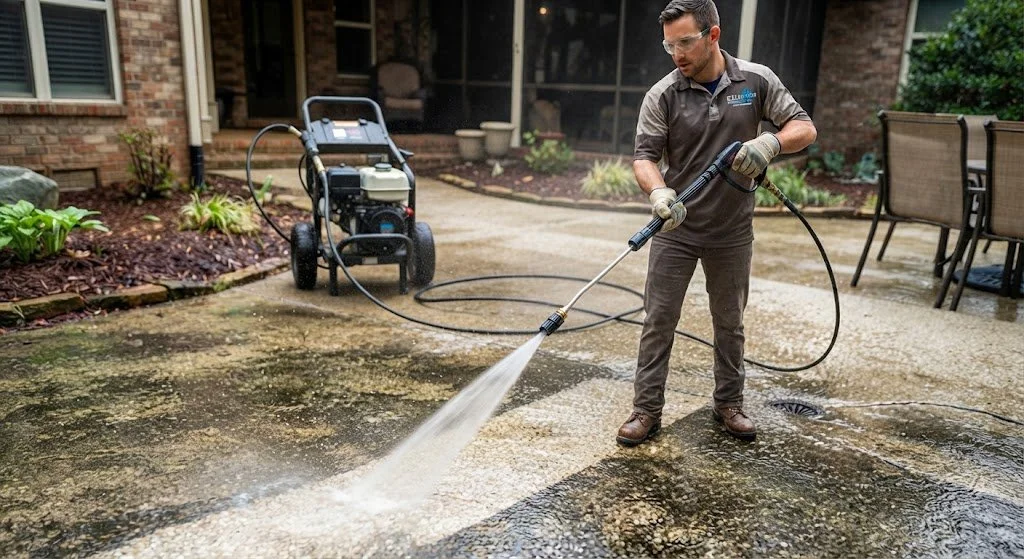
Power washing uses a high-pressure stream of water to remove dirt, mud, grime, and other surface buildup. Some power washers also heat the water, although the terms power washing and pressure washing are frequently used interchangeably in everyday conversation.
The cleaning force comes primarily from the water pressure and flow, which can be adjusted according to the equipment and cleaning task.
Best Uses for Power Washing
Power washing is often suitable for durable surfaces that can tolerate controlled pressure, including:
Concrete driveways and walkways
Some concrete patios
Certain masonry surfaces
Selected outdoor hardscape areas
Some heavily soiled, pressure-washer-compatible surfaces
For example, a concrete driveway may accumulate tire marks, mud, and embedded dirt that ordinary rinsing cannot remove easily. A pressure washer can help loosen this buildup when used with the appropriate nozzle and settings.
However, high pressure can damage softer materials, remove protective coatings, or force water into joints and openings. Always check the surface manufacturer's recommendations before cleaning.
What Is Soft Washing?
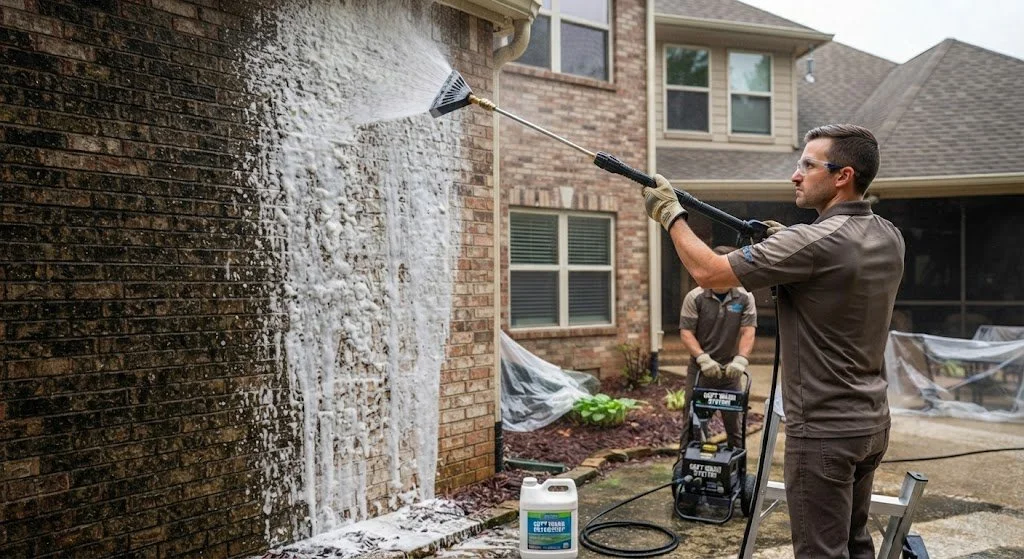
Soft washing is a low-pressure exterior cleaning method that uses water and suitable cleaning solutions to remove dirt, algae, mildew, and other organic buildup.
Instead of relying mainly on mechanical force, soft washing allows the cleaning solution to loosen contaminants so they can be rinsed away with relatively low pressure.
The chemicals used depend on the surface and the type of buildup. They must be selected and applied according to the product label, with appropriate precautions for people, pets, plants, and surrounding materials.
Best Uses for Soft Washing
Soft washing is commonly used for:
Vinyl siding
Painted exterior walls
Stucco and other delicate finishes
Certain types of roofing
Fences and other surfaces that may be damaged by high pressure
For instance, vinyl siding can develop green algae or dark staining in shaded, damp areas. A suitable soft-washing method can address this buildup without directing a powerful water stream into panel seams.
Not every surface should be treated with the same cleaning solution. Some materials require specialized products or gentler hand-cleaning methods.
Which Cleaning Method Is Best for Different Areas of Your Home?
The best method depends on the material rather than simply how dirty it looks.
1. Vinyl Siding
Soft washing is often the better choice. Vinyl siding can crack, loosen, or allow water behind the panels when exposed to excessive pressure or an unsuitable spray angle.
A low-pressure method with a siding-compatible cleaner can remove ordinary dirt and organic buildup. Always follow the siding manufacturer's instructions and avoid spraying water upward beneath overlapping panels.
2. Concrete Driveways and Walkways
Power washing is often effective. Concrete can tolerate more pressure than many painted or flexible exterior surfaces, making pressure washing useful for removing mud, grime, and some stubborn stains.
However, damaged concrete, decorative finishes, and older surfaces may require lower pressure or specialized cleaning methods. Excessive force can erode the surface or damage joints.
3. Roofs and Shingles
Soft washing or another manufacturer-approved low-pressure method is generally preferable for asphalt shingles. High-pressure water can dislodge protective granules and damage roofing materials.
Roof cleaning also presents fall hazards. Hire a qualified professional if the roof is steep, difficult to access, or heavily affected by algae.
4. Wood Decks and Fences
Gentle cleaning is usually the safest starting point. A suitable deck cleaner, soft brush, and garden hose may be enough for routine maintenance.
Pressure washing can damage wood fibers, create splinters, and strip stain or paint. If a pressure washer is appropriate, use conservative settings and test a small area first.
5. Painted Exterior Walls and Stucco
Soft washing is often the more suitable option. Strong water pressure can chip paint, damage fragile stucco, or force water into cracks.
Inspect the surface before cleaning. Loose paint, cracked stucco, and deteriorating finishes may need repairs before any washing method is used.
How to Choose the Right Exterior Cleaning Method
Before deciding between power washing and soft washing, consider these important factors.
Identify the surface material. Concrete, vinyl, wood, asphalt shingles, and painted walls have different cleaning requirements.
Check the type of buildup. Loose dirt may require only a gentle rinse, while algae and mildew may need an appropriate cleaning solution.
Assess the surface condition. Older, cracked, or poorly maintained materials may not tolerate aggressive cleaning.
Consider nearby landscaping. Cleaning chemicals and runoff can affect plants and surrounding surfaces. Protect them according to the product instructions.
Follow manufacturer guidance. The equipment, siding, roofing, and cleaning-product instructions should determine the appropriate method.
If you are unsure, start with the least aggressive method likely to work. A professional exterior cleaner can help assess surfaces that are fragile or difficult to reach.
Is It Better to Hire a Professional?
DIY exterior cleaning may be manageable for small, ground-level projects when you have suitable equipment and understand the safety precautions.
Professional cleaning is worth considering for multi-story homes, delicate roofing, extensive algae growth, and large or heavily stained surfaces. Experienced technicians can select appropriate equipment settings, cleaning products, and application methods for different materials.
Before hiring a contractor, ask which cleaning method they plan to use, how they will protect plants and surrounding surfaces, and whether the price includes cleaning solutions and rinsing. A reliable professional should explain how the process will reduce the risk of damage.
Frequently Asked Questions
Is soft washing better than power washing?
Soft washing is often better for delicate surfaces such as vinyl siding, painted walls, and asphalt shingles. Power washing is often more effective for compatible, durable surfaces such as concrete. The best option depends on the material and cleaning task.
Does soft washing damage siding?
Soft washing generally reduces the risk of pressure-related damage, but unsuitable chemicals or incorrect application can still harm siding and nearby materials. Use products approved for the surface and follow their instructions.
Can power washing remove mold and mildew?
Power washing can remove some surface buildup, but pressure alone may not address all organic growth. An appropriate cleaning solution may be needed, depending on the surface and the type of contamination.
How often should you wash your home's exterior?
There is no universal schedule. Cleaning frequency depends on local climate, shade, humidity, nearby trees, and the amount of dirt or algae buildup. Clean when needed using a method suitable for the surface.
Is soft washing safe for plants and pets?
It can pose risks if cleaning solutions or runoff contact plants, pets, or other sensitive areas. Follow product-label precautions, keep pets away during application, and protect vegetation as directed.
Final Thoughts
When comparing power washing vs. soft washing, the best choice depends on the surface, the type of buildup, and the risk of damage. Power washing can be effective for durable surfaces such as suitable concrete areas, while soft washing is often preferable for vinyl siding, painted walls, and asphalt shingles.
Before starting, inspect the surface, choose the least aggressive effective cleaning method, and follow manufacturer recommendations. Taking these precautions can help keep your home's exterior clean while protecting its materials and finishes.